From 2 Hours to Minutes: Redesigning Birbank Business Onboarding
From 2 Hours to Minutes: Redesigning Birbank Business Onboarding
My role:
My role:
Product Designer
Product Designer
Scope:
Scope:
End-to-end onboarding (redesign web application)
End-to-end onboarding (redesign web application)
Methods:
Methods:
Customer Journey Mapping, Research, Analytics review, Stakeholder inputs
Customer Journey Mapping, Research, Analytics review, Stakeholder inputs
Overview
Users spent a significant amount of time completing the onboarding process and frequently contacted the Call Center due to questions and difficulties they encountered along the way. We received numerous complaints from both stakeholders and business customers about the complexity of the process and its poor usability.
My task was to analyze the existing onboarding journey, identify the key pain points, and design a simpler, clearer, and more efficient flow.
Users spent a significant amount of time completing the onboarding process and frequently contacted the Call Center due to questions and difficulties they encountered along the way. We received numerous complaints from both stakeholders and business customers about the complexity of the process and its poor usability.
My task was to analyze the existing onboarding journey, identify the key pain points, and design a simpler, clearer, and more efficient flow.
Impact
+25%
Activation rate.
↓1.5h
Time to complete.
↓90%
Drop-off rates.
↓1.5h
Time to complete.
↓90%
Drop-off rates.
↓1.5h
Time to complete.
↓90%
Drop-off rates.
Users & Personas
The primary users included CEOs and founders, accountants, and individual entrepreneurs—each with different responsibilities, but a shared need for an efficient onboarding experience.
The primary users included CEOs and founders, accountants, and individual entrepreneurs—each with different responsibilities, but a shared need for an efficient onboarding experience.
Core User Needs
Core User Needs
A fast and simple registration process
Clear, step-by-step guidance
Confidence that they were progressing correctly
A fast and simple registration process
Clear, step-by-step guidance
Confidence that they were progressing correctly
Research
Based on customer experience research and data analysis, I mapped the Customer Journey of the existing onboarding process.
The analysis showed that onboarding was not only time-consuming but also created a high cognitive load for users. Multiple friction points made it difficult for users to progress through the journey and increased the likelihood of abandonment.
The onboarding process took approximately 2 hours to complete on average. The most time-consuming stages were entering business information, adding founder and signature holder details, and uploading and signing documents.
The main sources of friction were process complexity, repeated data entry, and manual verification requirements.
Based on customer experience research and data analysis, I mapped the Customer Journey of the existing onboarding process.
The analysis showed that onboarding was not only time-consuming but also created a high cognitive load for users. Multiple friction points made it difficult for users to progress through the journey and increased the likelihood of abandonment.
The onboarding process took approximately 2 hours to complete on average. The most time-consuming stages were entering business information, adding founder and signature holder details, and uploading and signing documents.
The main sources of friction were process complexity, repeated data entry, and manual verification requirements.

Common pain points
Users frequently missed scheduled video calls, which forced them to restart the process
Documents were often uploaded in incorrect formats, causing delays and rework
The flow contained too many steps and decision points, increasing drop-off risk
Manually entered information was prone to errors
There was no clear sense of progress, which reduced user confidence and motivation
Onboarding and Birbank Business functioned as separate platforms, creating a fragmented experience
The UI lacked clarity, increasing cognitive load and making the journey harder to navigate
Users frequently missed scheduled video calls, which forced them to restart the process
Documents were often uploaded in incorrect formats, causing delays and rework
The flow contained too many steps and decision points, increasing drop-off risk
Manually entered information was prone to errors
There was no clear sense of progress, which reduced user confidence and motivation
Onboarding and Birbank Business functioned as separate platforms, creating a fragmented experience
The UI lacked clarity, increasing cognitive load and making the journey harder to navigate
Defining the New Flow
To make the onboarding experience more manageable, I split the flow into two key stages: creating business customer profile and account activation. This decision was driven by the length and complexity of the original journey.
Many users could not complete the full onboarding process in one sitting, but restarting from the beginning created additional frustration. By separating the flow, users could first complete a short 3–4 minute creating profile step, then return later to continue the activation process without losing progress.
After gaining access, users landed on a dashboard where they could clearly see completed steps, upcoming tasks, and manage the remaining activation stages. This made the experience more flexible, transparent, and easier to complete over time.
The account activation stage was further divided into three key steps: adding founders, account creation, and video call scheduling. This made the longer part of the journey easier to understand and complete in smaller, more manageable stages.
To make the onboarding experience more manageable, I split the flow into two key stages: creating business customer profile and account activation. This decision was driven by the length and complexity of the original journey.
Many users could not complete the full onboarding process in one sitting, but restarting from the beginning created additional frustration. By separating the flow, users could first complete a short 3–4 minute creating profile step, then return later to continue the activation process without losing progress.
After gaining access, users landed on a dashboard where they could clearly see completed steps, upcoming tasks, and manage the remaining activation stages. This made the experience more flexible, transparent, and easier to complete over time.
The account activation stage was further divided into three key steps: adding founders, account creation, and video call scheduling. This made the longer part of the journey easier to understand and complete in smaller, more manageable stages.

Final designs
After two rounds of testing, we began polishing the final Minimum Viable Product (MVP) to prepare it for shipment and real-world user testing.
After two rounds of testing, we began polishing the final Minimum Viable Product (MVP) to prepare it for shipment and real-world user testing.
Creating the Business Customer Profile
The first stage of onboarding focused on CIF creation, designed as a 4-step flow that could be completed in 3–4 minutes. This stage served as a fast and structured entry point into the onboarding journey.
By combining automated data fetching, dynamic logic, and progressive disclosure, this stage reduced manual effort, minimized errors, and improved completion efficiency. Once completed, users were redirected to the dashboard to continue onboarding.
The first stage of onboarding focused on CIF creation, designed as a 4-step flow that could be completed in 3–4 minutes. This stage served as a fast and structured entry point into the onboarding journey.
By combining automated data fetching, dynamic logic, and progressive disclosure, this stage reduced manual effort, minimized errors, and improved completion efficiency. Once completed, users were redirected to the dashboard to continue onboarding.


By auto-filling tax registry data, the flow reduced user effort, minimized manual entry, and lowered the risk of errors
By auto-filling tax registry data, the flow reduced user effort, minimized manual entry, and lowered the risk of errors
Progress bar allows to see all steps indicates how much of a process is completed and how much remains.
Progress bar allows to see all steps indicates how much of a process is completed and how much remains.
Progress bar allows to see all steps indicates how much of a process is completed and how much remains.

Adding Founders
This stage is required only for legal entities — individual entrepreneurs don't go through this step in their onboarding flow. Depending on the complexity of the business, it currently takes 2–7 minutes to complete.
To simplify the flow and reduce manual workload, we implemented several solutions. First, most founder information for the parent company is automatically pulled from the tax registry, so users only need to fill in missing details. Second, I introduced document parsing technology, allowing users to upload founder-related documents and have the relevant fields auto-populated instead of typed manually. This addition alone helped solve several problems at once: it cut down data entry time, reduced input errors from manual typing, and gave users a faster way to complete complex ownership structures without navigating each sub-step individually.
This stage is required only for legal entities — individual entrepreneurs don't go through this step in their onboarding flow. Depending on the complexity of the business, it currently takes 2–7 minutes to complete.
To simplify the flow and reduce manual workload, we implemented several solutions. First, most founder information for the parent company is automatically pulled from the tax registry, so users only need to fill in missing details. Second, I introduced document parsing technology, allowing users to upload founder-related documents and have the relevant fields auto-populated instead of typed manually. This addition alone helped solve several problems at once: it cut down data entry time, reduced input errors from manual typing, and gave users a faster way to complete complex ownership structures without navigating each sub-step individually.
The parsing technology identifies whether any listed founder is legal entity, and if so, automatically adds a sub-step for that entity's ownership details — letting the system, not the user, decide what comes next.
The parsing technology identifies whether any listed founder is legal entity, and if so, automatically adds a sub-step for that entity's ownership details — letting the system, not the user, decide what comes next.
Account Creation
The third stage of the onboarding flow was the account creation step. Here, users selected the currency accounts they wanted to open and provided information about the countries in which they were tax residents.
This step was designed to be completed quickly, with an average completion time of 2–5 minutes.
The third stage of the onboarding flow was the account creation step. Here, users selected the currency accounts they wanted to open and provided information about the countries in which they were tax residents.
This step was designed to be completed quickly, with an average completion time of 2–5 minutes.
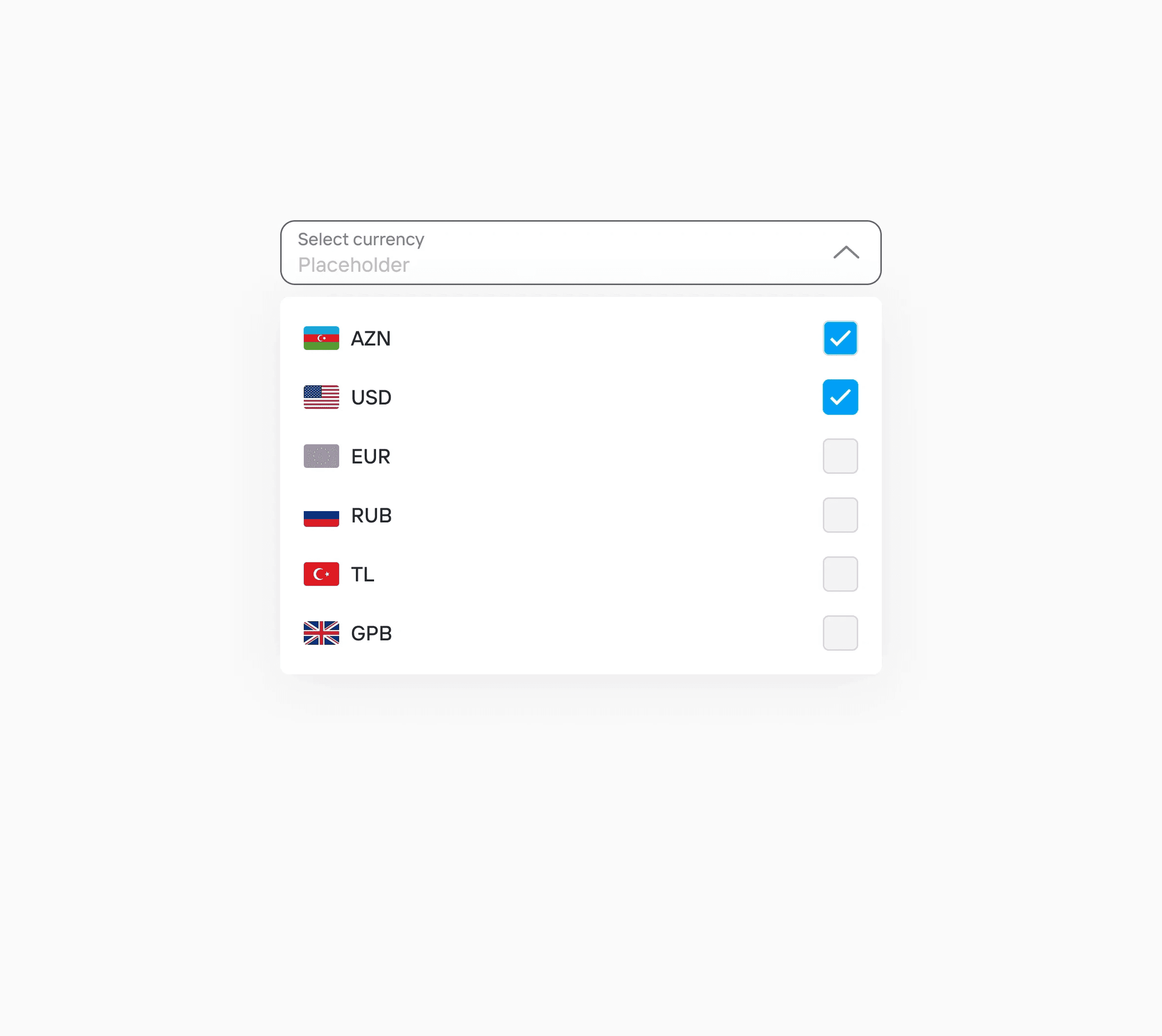
Since many users needed to open multiple currency accounts, I introduced a multi-select option that allowed them to complete this action in a single step, reducing repetition and improving efficiency.
Since many users needed to open multiple currency accounts, I introduced a multi-select option that allowed them to complete this action in a single step, reducing repetition and improving efficiency.

Videocall
The final step of legal entity onboarding was video call scheduling, which completed the verification process before account activation.
Since onboarding was often completed by accountants, while the video call had to be attended by directors, this step was designed with flexibility in mind. Users could schedule a call within a 10-day window, making it easier to align with directors’ availability.
To reduce missed appointments, the flow included automated email and SMS reminders. Once the video call was completed, the account was activated automatically, giving users access to the Birbank Business dashboard.
The final step of legal entity onboarding was video call scheduling, which completed the verification process before account activation.
Since onboarding was often completed by accountants, while the video call had to be attended by directors, this step was designed with flexibility in mind. Users could schedule a call within a 10-day window, making it easier to align with directors’ availability.
To reduce missed appointments, the flow included automated email and SMS reminders. Once the video call was completed, the account was activated automatically, giving users access to the Birbank Business dashboard.
Final outcome
As a result, users gained the ability to track their registration progress throughout the process, the founders stage was simplified, and several steps that added unnecessary weight to onboarding were removed — for example, adding signature holders was taken out of the onboarding flow entirely and moved to the personal cabinet instead. The video call step was optimized, and many previously manual processes were automated.
As a result, users gained the ability to track their registration progress throughout the process, the founders stage was simplified, and several steps that added unnecessary weight to onboarding were removed — for example, adding signature holders was taken out of the onboarding flow entirely and moved to the personal cabinet instead. The video call step was optimized, and many previously manual processes were automated.
Challenges
The legal entity registration flow is inherently long and complex by nature. My task was to make the flow smoother for users despite these constraints. The second challenge was limitations on the development side — some ideal solutions couldn't be fully implemented at this stage. Because of this, we shipped to production with existing capabilities while keeping certain improvements in mind for future development.
The legal entity registration flow is inherently long and complex by nature. My task was to make the flow smoother for users despite these constraints. The second challenge was limitations on the development side — some ideal solutions couldn't be fully implemented at this stage. Because of this, we shipped to production with existing capabilities while keeping certain improvements in mind for future development.
What I learned
The main thing I learned from this project was working with edge cases — rather than leaving them for last, they need to be identified early and the design built around them from the start.
The main thing I learned from this project was working with edge cases — rather than leaving them for last, they need to be identified early and the design built around them from the start.